
Minha Escolha · Blog
Simple composition: do fewer ingredients mean better?
Understand how to compare products by composition and why a shorter list alone does not guarantee quality.
By Minha Escolha
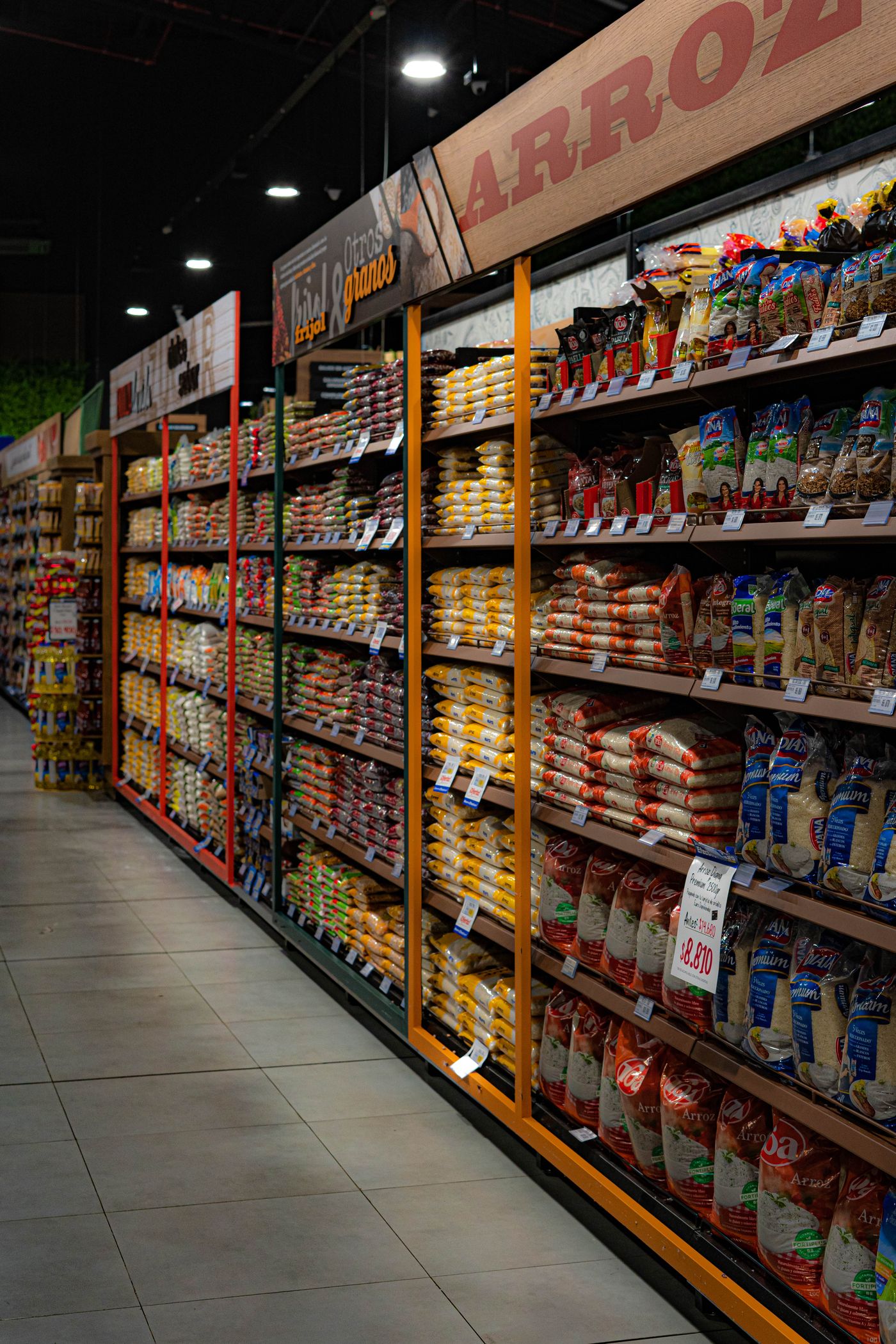
Simple composition is gaining space in food
The composition of industrialized foods is changing. Companies have been reformulating products to reduce certain additives and offer alternatives with simpler ingredient lists, following a shift in consumer expectations.
Brazil's National Health Surveillance Agency (Anvisa) itself recognizes this trend. In a technical document about food additives, the agency states that there is a global trend toward reformulating processed foods and beverages to reduce the use of additives and make ingredient lists simpler and easier to understand.
The movement also appears in strategies announced by large companies in the sector.
Why are companies reformulating?
Food composition has started to receive more attention from consumers.
In addition to nutrition facts, the ingredient list makes it possible to identify which raw materials, additives and other components are part of a product's formulation.
In Brazil, the law determines that ingredients must be presented in descending order of proportion. In other words, the ingredients used in greater quantity appear first on the list.
Food additives must also be declared in the ingredient list, according to labeling rules.
This makes composition one of the main sources of information available to anyone comparing products.
Have fewer ingredients become a trend?
Reducing the number of ingredients is not a rule that determines by itself whether a food is better or worse.
A product with few ingredients may have different nutritional characteristics from another with a longer list. Likewise, the presence of an additive does not automatically mean the food is inadequate.
The World Health Organization explains that additives are used mainly for technological reasons, such as preservation, safety, stability and sensory characteristics. It also notes that additives undergo safety evaluations before being authorized for use.
That is why the discussion about composition involves more than simply counting how many ingredients appear on the label.
The industry is already changing
This trend can be seen in recent launches and reformulations.
PepsiCo, for example, announced an innovation agenda with products that remove artificial colors and flavors, use simpler ingredients and incorporate characteristics such as higher amounts of protein, fiber and whole grains.
The company also reported in its 2025 annual report that it was moving forward with the removal of artificial colors and flavors from products under brands such as Lay's, Cheetos and Doritos, while also working to reduce added sugar, sodium and saturated fat in some brands.
Another example is PepsiCo's Simply line, which brings together products with no added artificial colors or flavors in certain categories.
These movements show that composition has become part of the strategy for developing new products.
But a shorter list does not tell the whole story
The number of ingredients is only one of the pieces of information that can be used for comparison.
It is also important to observe:
- amount of sugar;
- amount of sodium;
- saturated fat;
- protein;
- fiber;
- presence of allergens;
- ingredients used;
- additives present;
- serving size;
- specific characteristics of the category.
A product does not automatically become better just because it has a shorter list.
In the same way, a long list does not automatically mean the product is inadequate.
What changes for consumers?
The main change is that composition becomes more important in the purchase decision.
Instead of comparing only brands, packages or prices, consumers can analyze the product itself and its characteristics.
Anvisa states that labeling rules have exactly the purpose of providing information that helps consumers choose foods.
With companies reformulating products and launching alternatives with different composition proposals, comparing this information tends to become increasingly relevant.
Composition has become part of the choice
The discussion about ingredients does not mean that all additives are bad or that every product with a long list should be avoided.
What is changing is the amount of information available and consumer interest in it.
Products in the same category can have different formulations, and these differences can be identified directly on the label.
That is why, before choosing a product, it is worth looking beyond the package.
Composition is also part of the choice.
Sources
- Anvisa, Technical Report No. 70 on food additives and reformulation trends.
- Anvisa, rules for declaring ingredient lists.
- World Health Organization, Food Additives.
- PepsiCo, innovation priorities and product reformulation.